Ferrari Roma (F169) Tuning Guide 2026 — Body Kits, Wheels & Performance


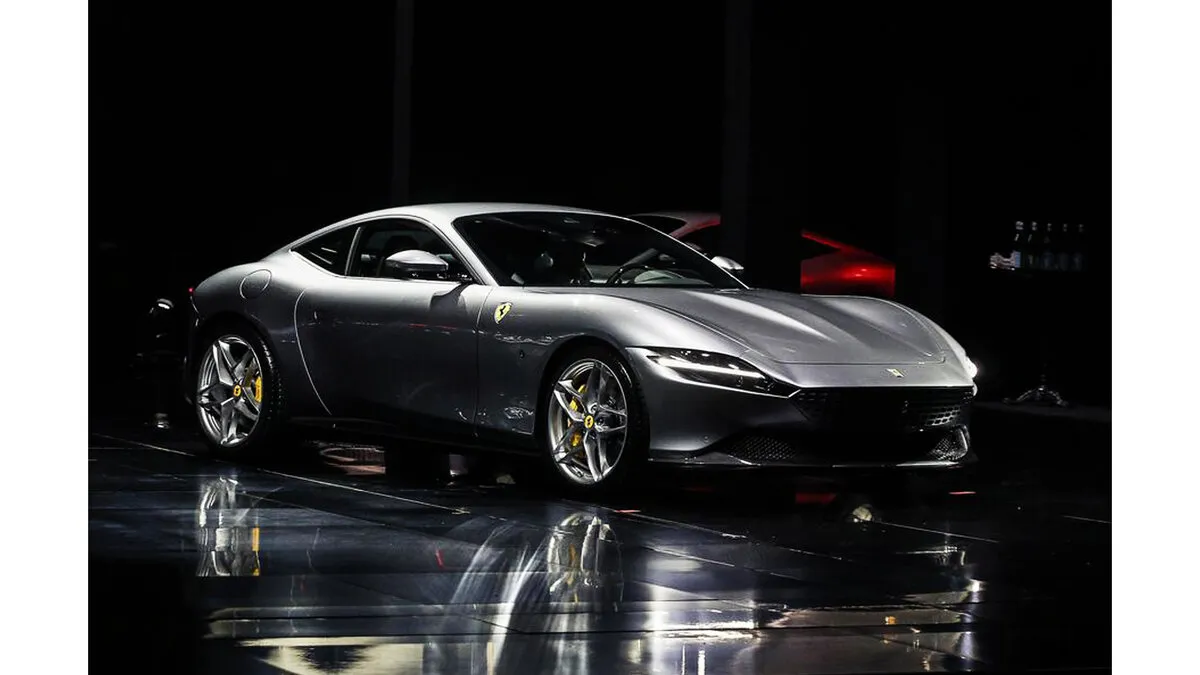
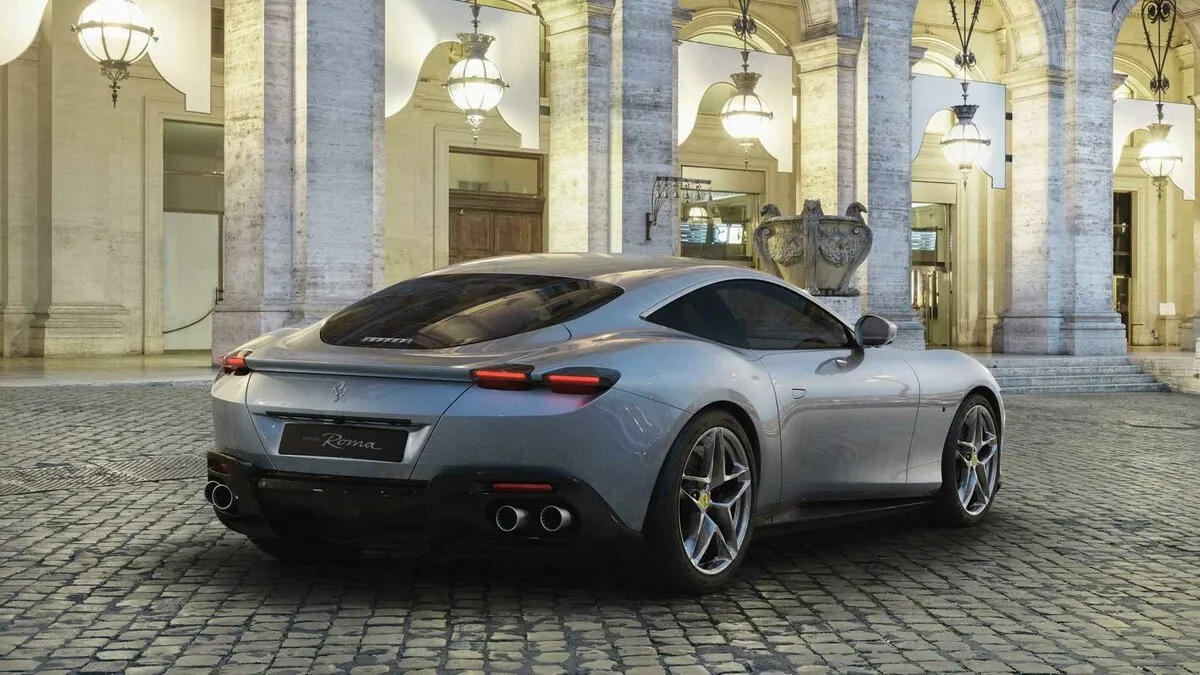
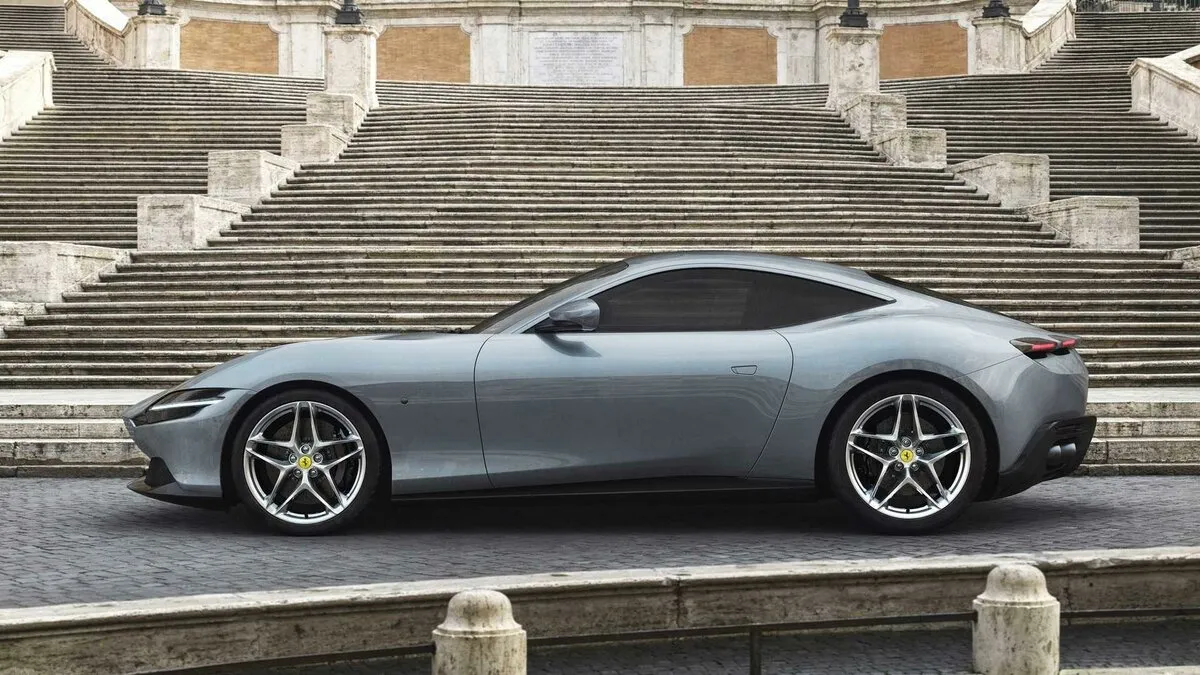
The Ferrari Roma is Maranello's answer to a simple question: what does a Ferrari for the post-supercar era look like? Launched in 2020 on the new F169 chassis, the Roma rejects the wedge-and-wing formula in favour of a clean shark-nose proportions, a long hood and a 2+2 cabin wrapped in one of the most restrained shapes Ferrari has drawn in decades. Underneath the designer surface sits the 3.9-litre F154BB twin-turbo V8 — 620 hp, 760 Nm, an eight-speed DCT shared with the SF90 and rear-wheel drive only. This guide covers every credible upgrade available for the Roma and the 2024 Roma Spider — body kits, wheels, performance, interior — and explains which actually suit a car designed around "La Nuova Dolce Vita" rather than lap times.
Ferrari Roma Specifications
| Parameter | Roma Coupe (2020+) | Roma Spider (2024+) |
|---|---|---|
| Chassis code | F169 | F169 Spider |
| Engine | 3.9L F154BB twin-turbo V8 | 3.9L F154BB twin-turbo V8 |
| Power | 620 hp @ 5,750–7,500 rpm | 620 hp @ 5,750–7,500 rpm |
| Torque | 760 Nm @ 3,000–5,750 rpm | 760 Nm @ 3,000–5,750 rpm |
| Transmission | 8-speed DCT (SF90-derived) | 8-speed DCT |
| Drivetrain | Rear-wheel drive (no 4WD) | Rear-wheel drive |
| 0–100 km/h | 3.4 s | 3.4 s |
| Top speed | 320 km/h | 320 km/h |
| Roof | Fixed aluminium coupe | Folding fabric soft-top |
| Platform | Ferrari front-mid GT aluminium spaceframe | Reinforced Spider chassis |
| Production | 2020 onward | 2024 onward |
Platform Overview — F169 Aluminium Spaceframe
The Roma sits on an entirely new front-mid-engined aluminium spaceframe. In spirit it is a Portofino M sibling — both share the front-engine GT architecture, the F154BB V8 and the broad layout philosophy — but the Roma's bodywork, wheelbase and chassis tuning are unique, with architectural cues inherited from the older F12 and 812 Superfast family. The gearbox is the real headline: the eight-speed DCT that later appeared on the SF90 Stradale debuts here in a purely rear-wheel-drive configuration, shorter and dry-sump, allowing a lower engine position and a more rearward weight bias than Portofino. There is no four-wheel drive, no hybrid assistance and no electric motor — the Roma is resolutely an analogue GT by 2020s Ferrari standards. For tuners this matters for two reasons: the F154BB block is extremely well understood (it is the same family used in the 488 GTB, Pista and F8 Tributo, recalibrated for GT character), and the chassis responds cleanly to spring, damper and wheel changes without ECU dramas over transfer cases or clutch packs. Every major Ferrari tuner on the planet — Novitec first and foremost — has developed a dedicated Roma programme.
Ferrari Roma Body Kits
Novitec — The Default Choice
Novitec is the undisputed number-one Ferrari aftermarket house, and its Roma programme is correspondingly deep. The carbon aero set includes a front spoiler that bolts onto the lower bumper and sharpens the shark-nose, visible carbon side skirts, a rear diffuser insert and a subtle ducktail-style boot spoiler. None of it turns the Roma into a bewinged track car — Novitec reads the design brief correctly, keeping the bodywork clean and letting the carbon speak through weave alone. All parts are prepreg autoclave carbon with matched UV-stable lacquer, and each panel is offered in matte or high-gloss. Combined with the signature Novitec NF1 forged wheels and the lowering module that drops the Roma 25 mm, the result looks like a factory V-Max option pack rather than aftermarket.
Mansory — Full Re-Skin
Mansory takes the opposite route. Its Roma programme is a complete visual re-skin: new clamshell front end with integrated splitter and wider intakes, flared front fenders, a vented bonnet, carbon side skirts that cut the visual sill height, flared rear haunches and a multi-element rear diffuser. LED daytime signatures are reshaped, the rear tail panel is re-sculpted and the badge script changes. Inside, Mansory re-trims the full cabin in diamond-quilted leather over Alcantara, typically with contrast stitching and coloured seat belts. It is polarising — the Roma was designed around restraint, and Mansory is the antithesis of restraint — but for buyers who want their Ferrari to be instantly recognisable from 200 metres, nothing else in the catalogue goes this far.
Capristo — Carbon Discretion Specialists
Capristo (Germany) is best known for its exhausts but offers a strong carbon programme for the Roma. Focus items are a carbon engine cover that replaces the plastic OEM part under the bonnet, carbon mirror caps, carbon paddle extensions behind the steering wheel, carbon interior trim and a neat carbon front lip. Nothing on the Capristo list widens a single panel — this is the option for owners who want the material, not the shape, to do the talking. Many Roma owners combine a Capristo engine-cover-and-interior package with a Novitec exterior kit.
DMC — Diamond GT
DMC's "Diamond GT" programme for the Roma sits between Novitec and Mansory in visual aggression. Key parts are a sharper front splitter with integrated canards, carbon side blades across the sills, a carbon boot-lid spoiler and a tri-element rear diffuser. DMC is also one of the few tuners making an optional carbon hood with dual venting, a part that visibly alters the Roma's silhouette for owners who want more than a trim upgrade without going fully Mansory.
Misha Designs — Rare But Real
Misha Designs is better known for Lamborghini programmes, but the US-based studio has produced a small run of Roma carbon details — front lip, rear lip, mirror caps. For Ferrari owners in North America who want something outside the usual Novitec-Mansory-Capristo matrix, Misha is the rarity option.
We ship Novitec, Mansory, Capristo and DMC parts for the Roma and Roma Spider worldwide with fitment support. Contact [email protected] for a full quote including freight, customs and an installer in your city.
Ferrari Roma Wheels — 21"/22" Staggered Forged
The Roma ships from the factory on 20-inch wheels at both axles — attractive, but visually smaller than the body demands. The standard aftermarket recipe is a staggered 21-inch front / 22-inch rear setup, typically 21×9 ET25 at the front and 22×11.5 ET40 at the rear, running 245/35 R21 and 295/30 R22 rubber. The extra diameter fills the arches correctly and the stagger shifts the visual weight rearward, emphasising the long-nose proportions.
Forged construction is not optional at 22 inches of rear width. A well-made forged monoblock or three-piece for the Roma sits at roughly 12 kg per corner at the rear — a significant unsprung-mass saving over cast options and a meaningful protection for the F154BB's response to throttle mid-corner. Popular fitments include the Novitec NF1 (forged five-spoke, matches Novitec's lowering module), ANRKY S2-X3, Brixton M53 (targa multi-piece, high-concours choice), and HRE P207. Tyre choice runs Michelin Pilot Sport 4S or Pilot Sport Cup 2 depending on owner intent; for a Roma Spider used in summer only, Pilot Sport 4S is the more comfortable default.
Ferrari Roma Performance — Stage 1 & Stage 2
The F154BB V8 in the Roma starts at 620 hp / 760 Nm and responds extremely well to calibration. Novitec's N-Largo Stage 1 ECU upgrade raises output to approximately 715 hp and 870 Nm while retaining the factory exhaust and stock hardware. The map revises turbo boost pressure, fuel injection timing and throttle response across the rev range, and is fully reversible via the OBD interface — a meaningful consideration for owners who plan to return the car to stock before selling.
Novitec's Stage 2 package adds stainless-steel high-flow downpipes with 200-cell sport catalysts, raising output to roughly 750 hp and 920 Nm. Paired with a valve-controlled cat-back exhaust — either Novitec's own or a Capristo Stainless Sport titanium system, or an Akrapovic Evolution Line titanium exhaust with carbon tailpipes — the car gains roughly 25–30 kg in rotating and exhaust mass reduction and the characteristic F154BB crackle returns, previously muted by the factory gasoline particulate filter. Capristo and Akrapovic both offer valve-controlled systems that sit quiet below 3,000 rpm and open progressively as revs climb; the Akrapovic is the more modular, the Capristo the more resonant.
Chassis upgrades centre on KW V4 coilovers (the top-tier KW programme with track-grade rebound and compression adjustability and lift-axle compatibility for steep driveways) or the Novitec electronic lowering module that works with the factory magnetic dampers. Brake upgrades for hard-driven Romas focus on Brembo CCM-R carbon-ceramic replacement pads — the standard CCM discs are excellent and rarely replaced, but pad choice transforms pedal feel under repeated hard use.
Ferrari Roma Interior Upgrades
Interior work for the Roma concentrates on three areas: seats and leather (Carlex Design of Poland is a go-to for bespoke full re-trims in Nappa and Alcantara, frequently paired with contrast-stitched headliners), carbon trim and paddles (Capristo extended paddles are the single most-fitted upgrade), and Alcantara overlays for the dashboard top and console. Novitec and DMC both offer matching interior carbon sets with weave that matches the exterior body kit.
Who Buys a Tuned Ferrari Roma? Three Buyer Personas
The Returning Ferrarista. On their second or third prancing-horse — likely a prior Portofino, California T or 458 in the garage — this owner knows the Novitec name and orders a Stage 1 ECU with a Capristo engine cover and Novitec NF1 wheels on day one. They drive the car three to four times a week, use it for restaurant runs and occasional 500 km weekend trips, and treat it as daily transport rather than a collector piece. Warranty preservation matters: they want a reversible tune and a factory-quality fit.
The Lifestyle Aesthete. First Ferrari, typically a 2024 Roma Spider specified in Grigio Titanio with a tan interior. Visual glamour is the brief — they want the car photographed outside Cipriani or Nobu, not chasing lap times. A Mansory full kit with matched forged wheels, colour-coded brake calipers and a fully re-trimmed diamond-quilted cabin is the natural choice. Stage 1 ECU is often added for the audio difference alone; downpipes rarely feature.
The Track Convert. Moving down from a 488 Pista or F8 Tributo, this buyer treats the Roma as a quieter daily that still needs to be quick. Minimal exterior aero (Novitec front splitter and diffuser only), Stage 2 ECU with downpipes for the full 750 hp, KW V4 coilovers, and Brembo CCM-R race pads with a track-biased Cup 2 tyre. They drive their Roma on road trips in summer and track days at Vallelunga or Portimão twice a year.
Frequently Asked Questions
Ferrari Roma vs Portofino M — which platform tunes better?
Both cars share the F154BB V8 and the front-mid layout, but the Roma uses a tighter aluminium spaceframe and the newer SF90-derived eight-speed DCT, compared with the Portofino M's seven-speed. The Roma responds better to Stage 1 calibration because it already has more aggressive factory maps, and the stiffer chassis accepts 22-inch forged wheels and KW V4 coilovers without the compromises a convertible structure imposes. Portofino M is the better pure grand-tourer baseline; the Roma is the better tuning canvas.
Does a Stage 1 ECU upgrade void the F154BB warranty?
Officially, yes — any Ferrari dealer can detect a non-factory calibration through the KWP2000 diagnostic interface, and a detected remap voids powertrain coverage. Practically, reputable tuners like Novitec supply fully reversible maps that flash back to OEM via OBD before dealer visits, and that is the standard operating procedure for Roma Stage 1 owners still under warranty. Stage 2 is more visible because the downpipes are physical hardware and cannot be hidden.
Is a 22-inch rear wheel comfortable on the Roma Spider?
It can be, if the wheel is forged, the tyre profile is correct (295/30 R22 is the right spec) and the car retains its factory magnetic dampers or uses KW V4 coilovers with the correct spring rate. Cast 22-inch wheels exceed the unsprung-mass budget and turn the Roma choppy over expansion joints; forged at ~12 kg per corner preserves the GT ride quality. Owners optimising for comfort stick with 21-inch rear; owners optimising for presence move to 22.
Does the Roma Spider tune differently from the coupe?
Mechanically no — the F154BB, the DCT and the entire tuning map catalogue are identical. Structurally yes — the Spider is approximately 80 kg heavier due to the folding roof mechanism and chassis reinforcement, which changes spring and damper preferences (Spider owners generally run slightly softer compression damping), and the open cabin makes exhaust choice more consequential. Capristo and Akrapovic tip lines become more audible in the Spider, so valve-controlled systems with a defined quiet mode are strongly preferred over fixed-open sport exhausts.
Hodoor ships Novitec, Mansory, Capristo, DMC, Akrapovic, KW and Brembo parts for the Ferrari Roma F169 and Roma Spider worldwide. Email [email protected] with your VIN, chassis year and target spec — we return a full quote with freight, customs and local install options within 24 hours.