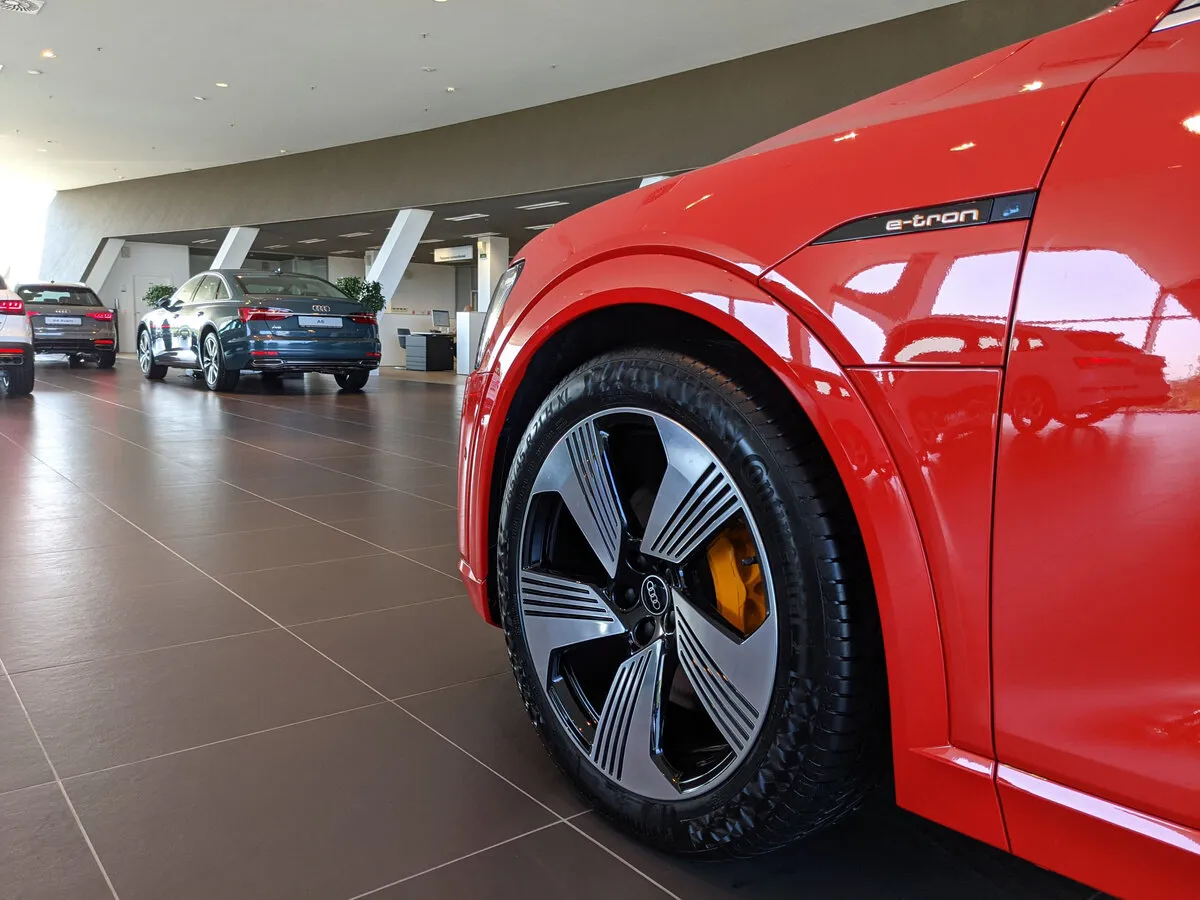
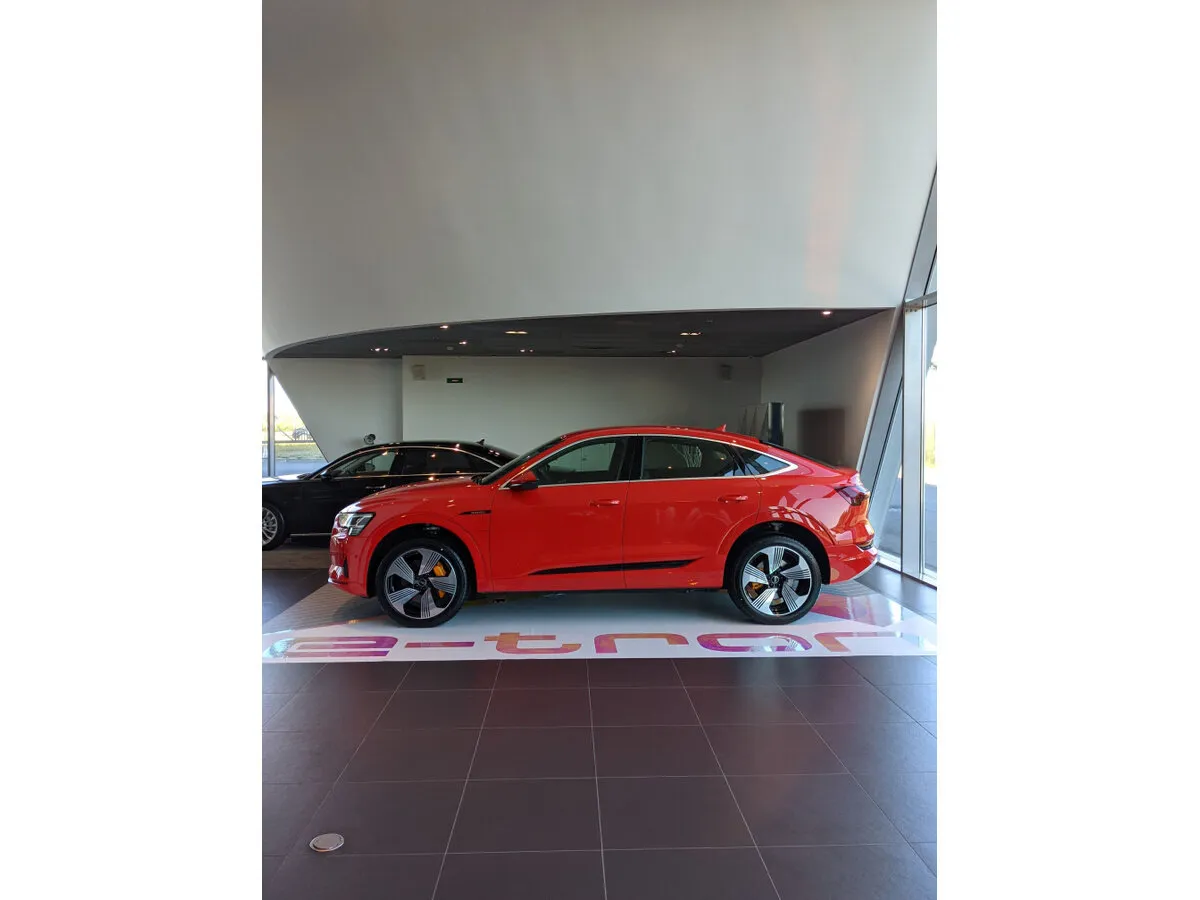
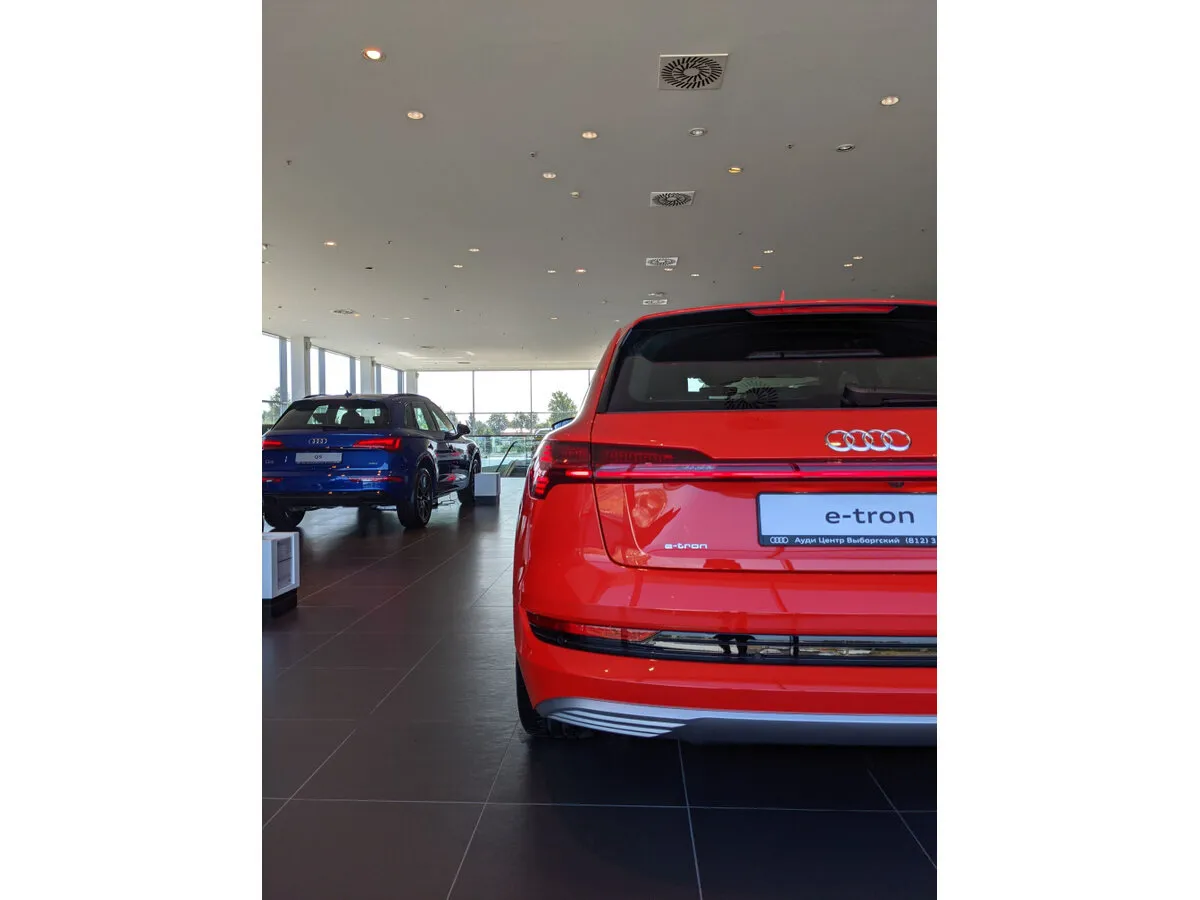
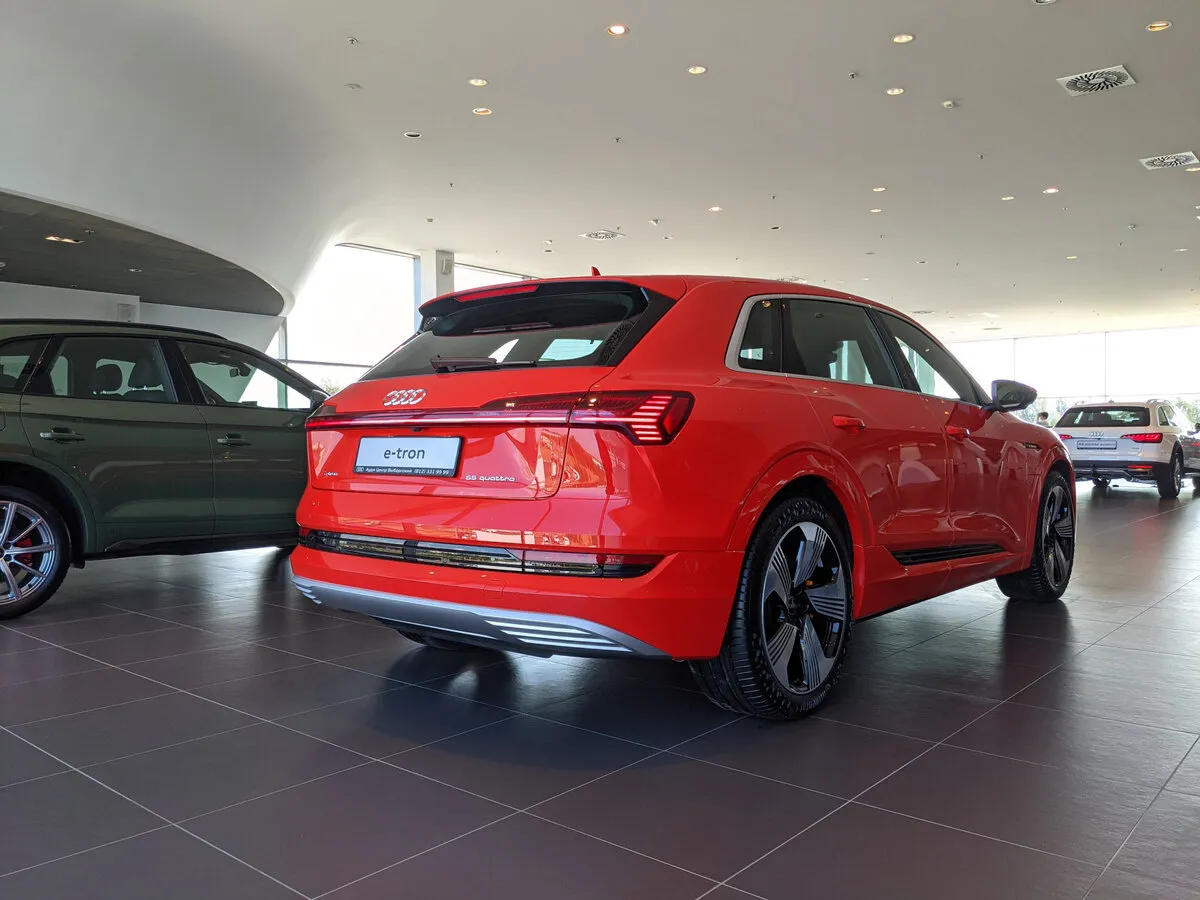
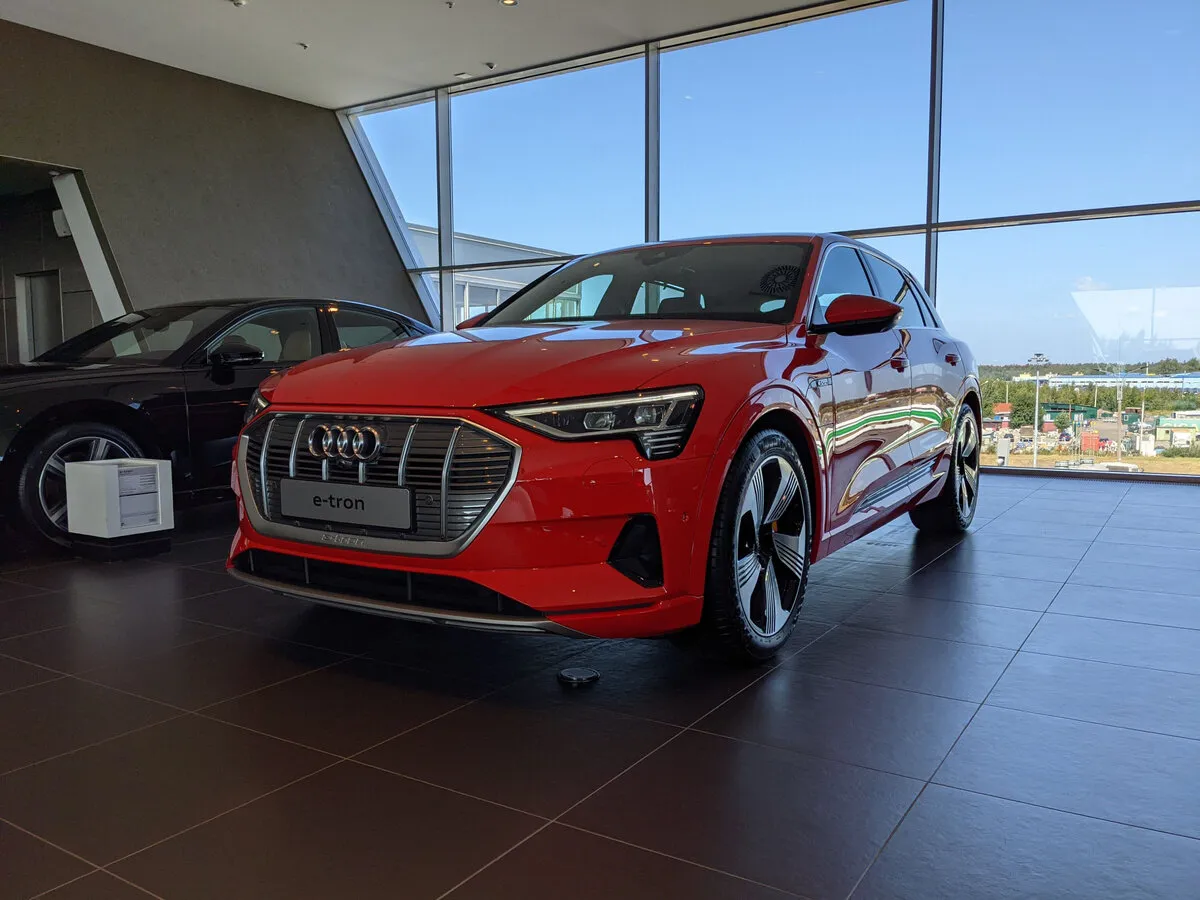
Audi e-tron 55 / Q8 e-tron Tuning Guide 2026 — Body Kits, Wheels & Upgrades


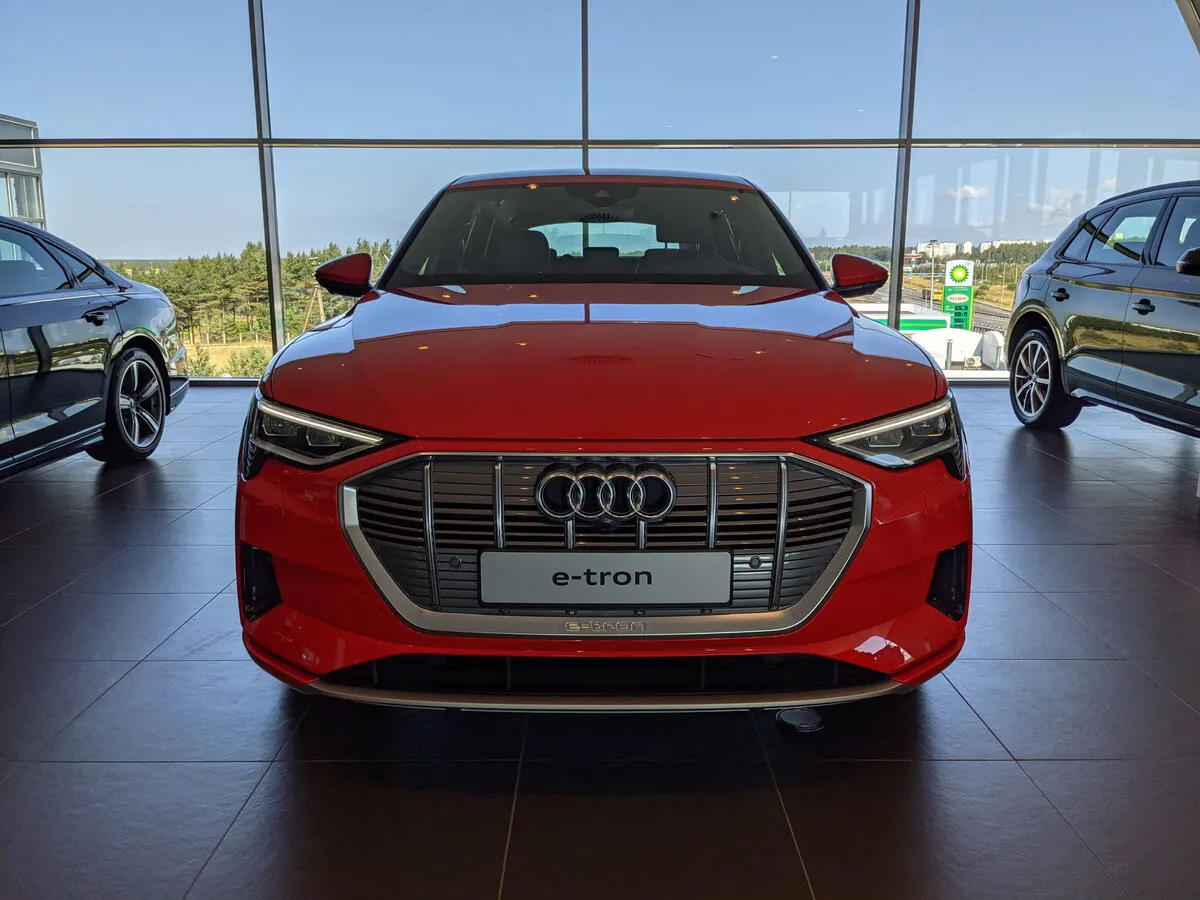
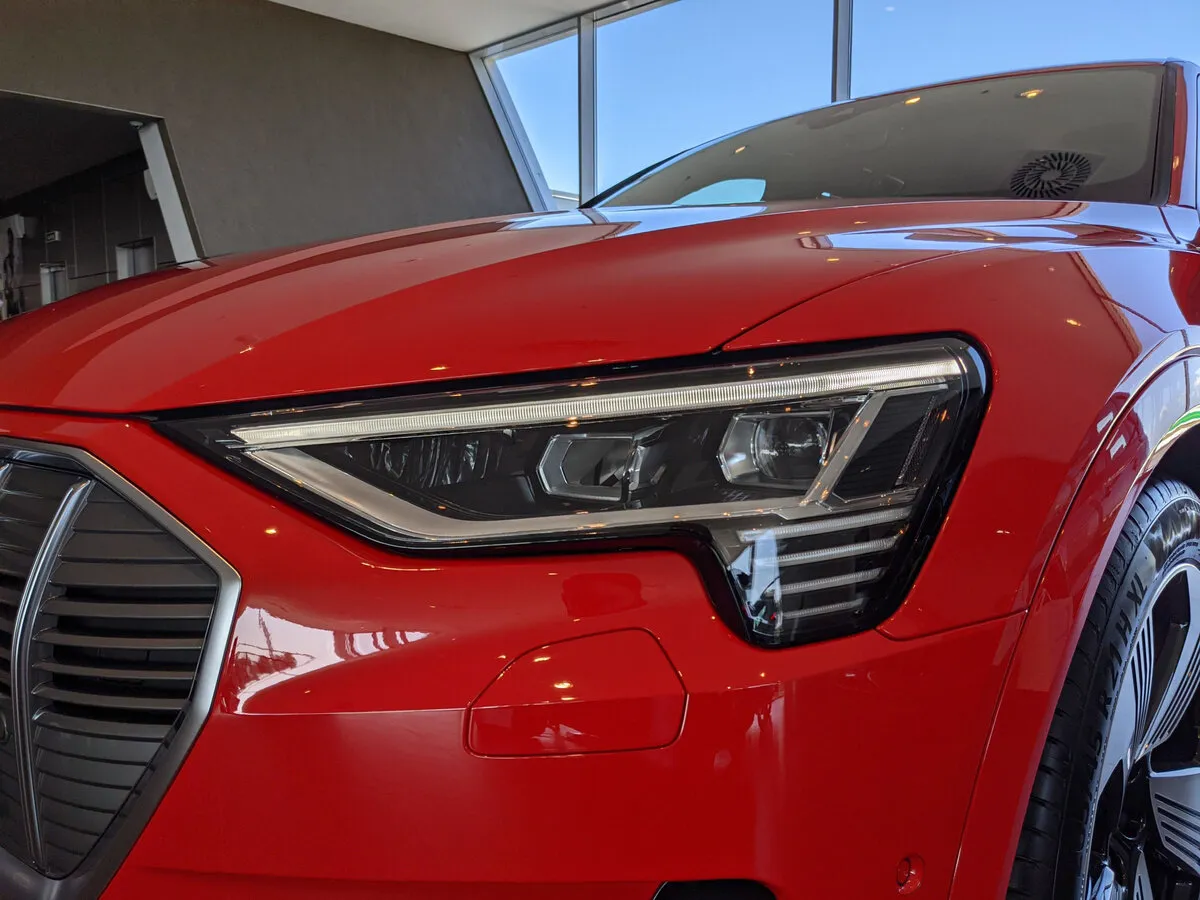
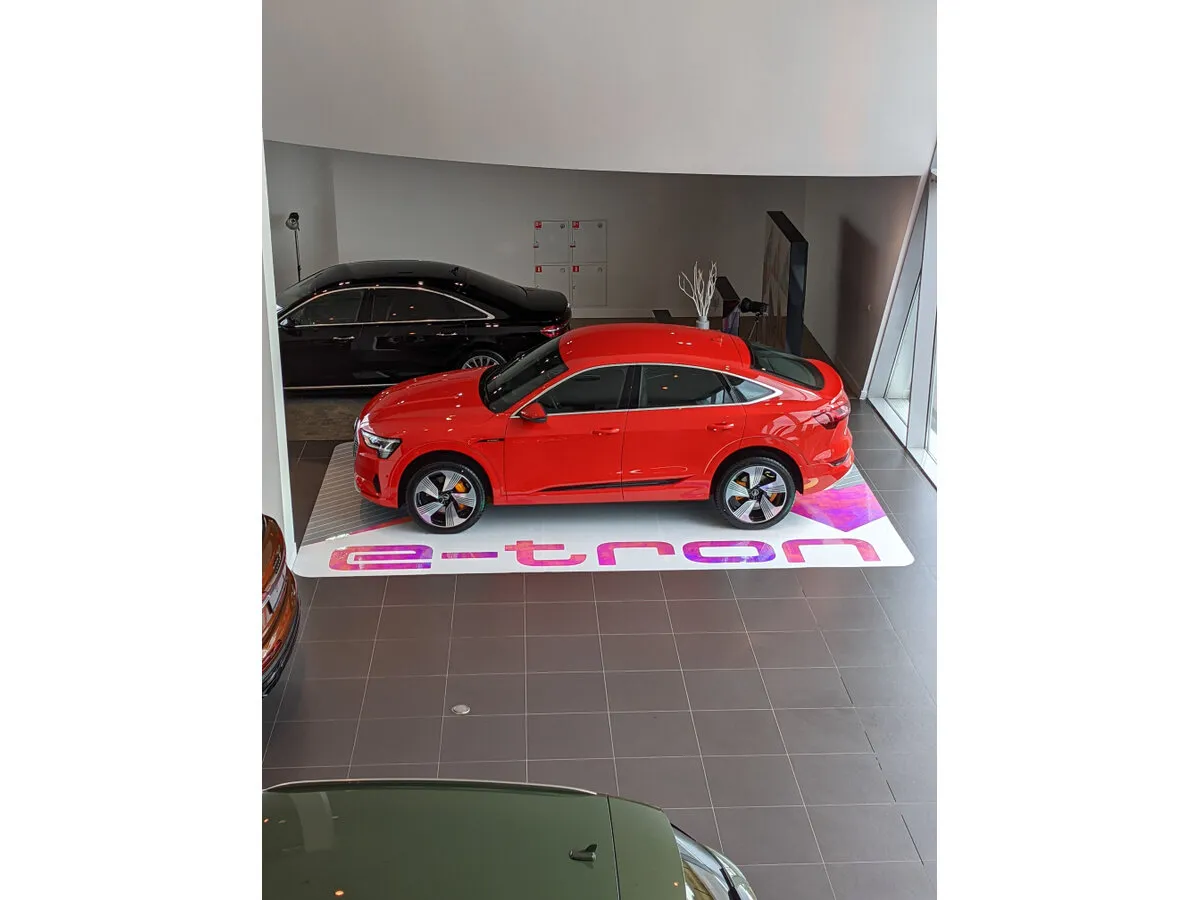
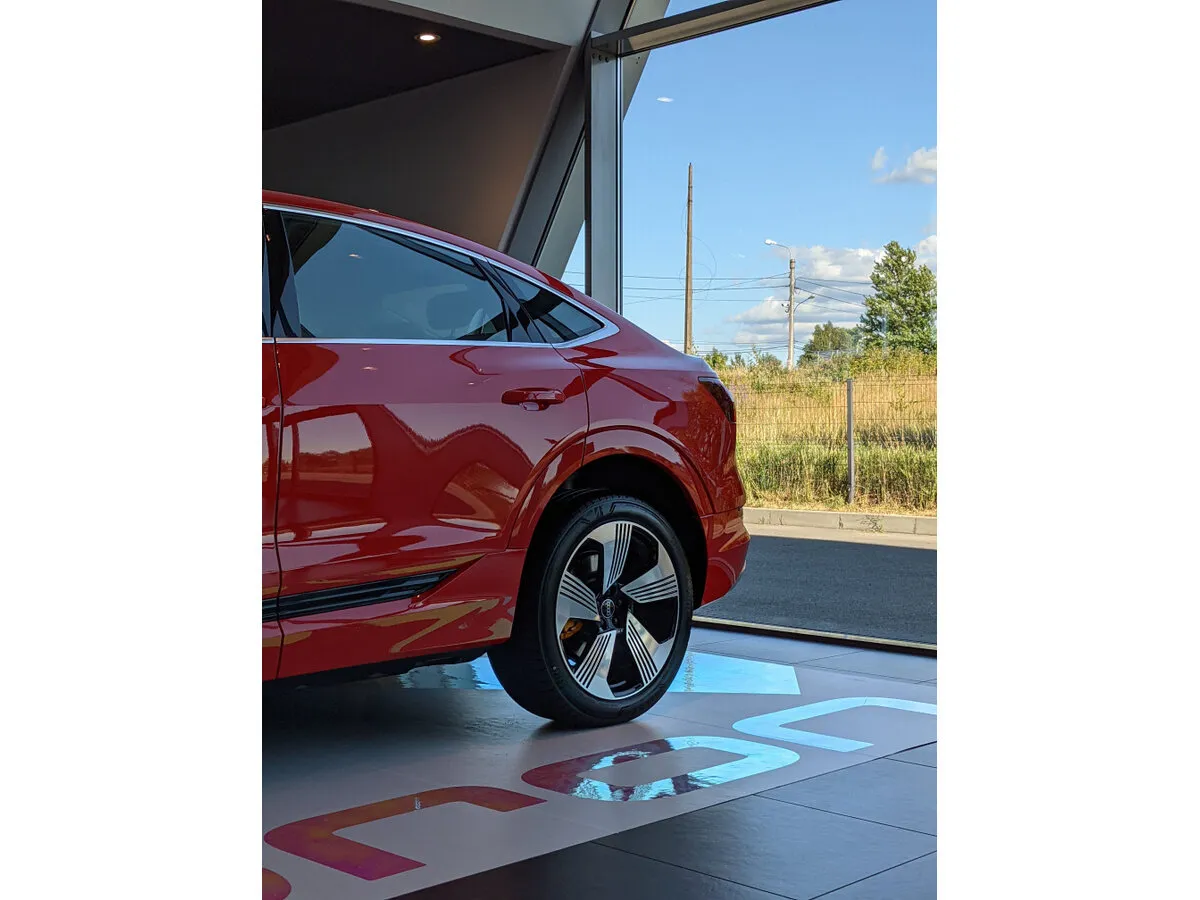
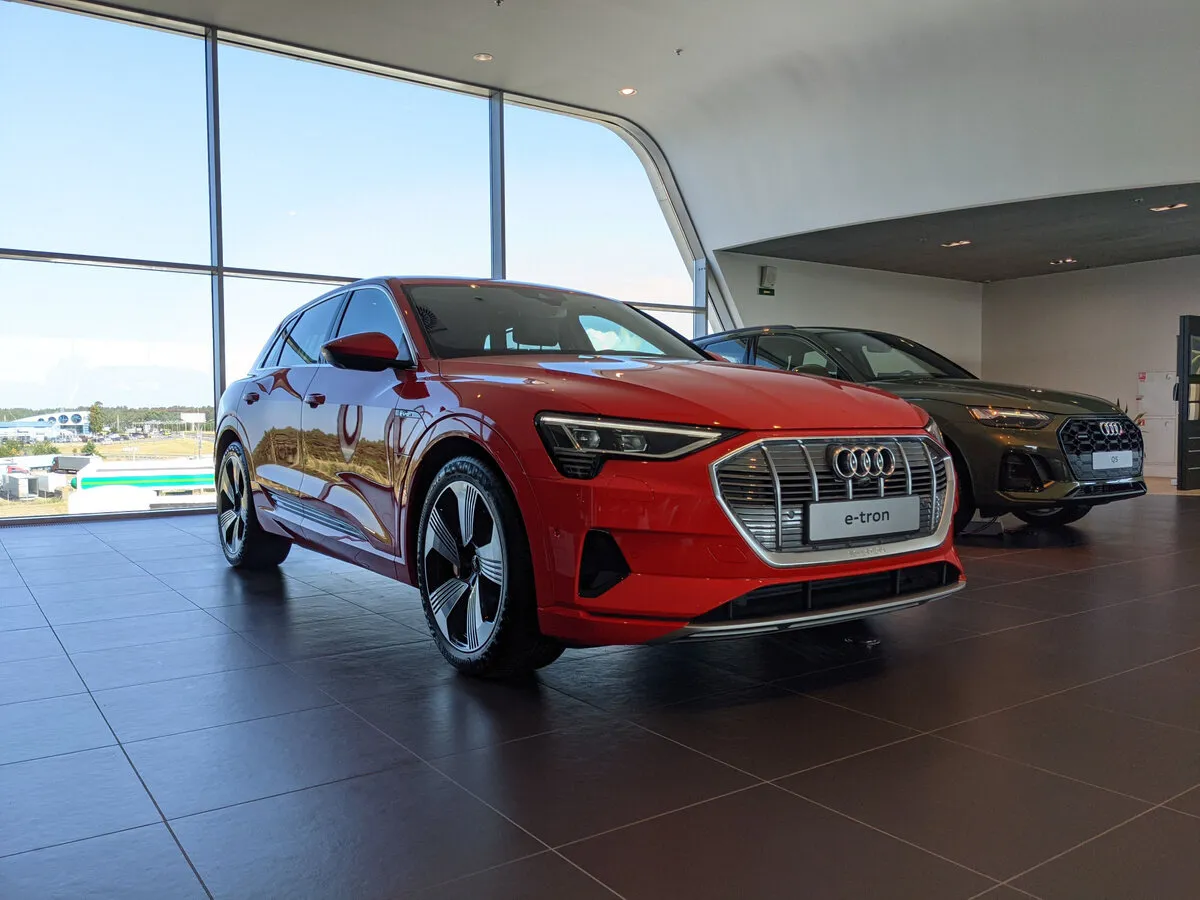
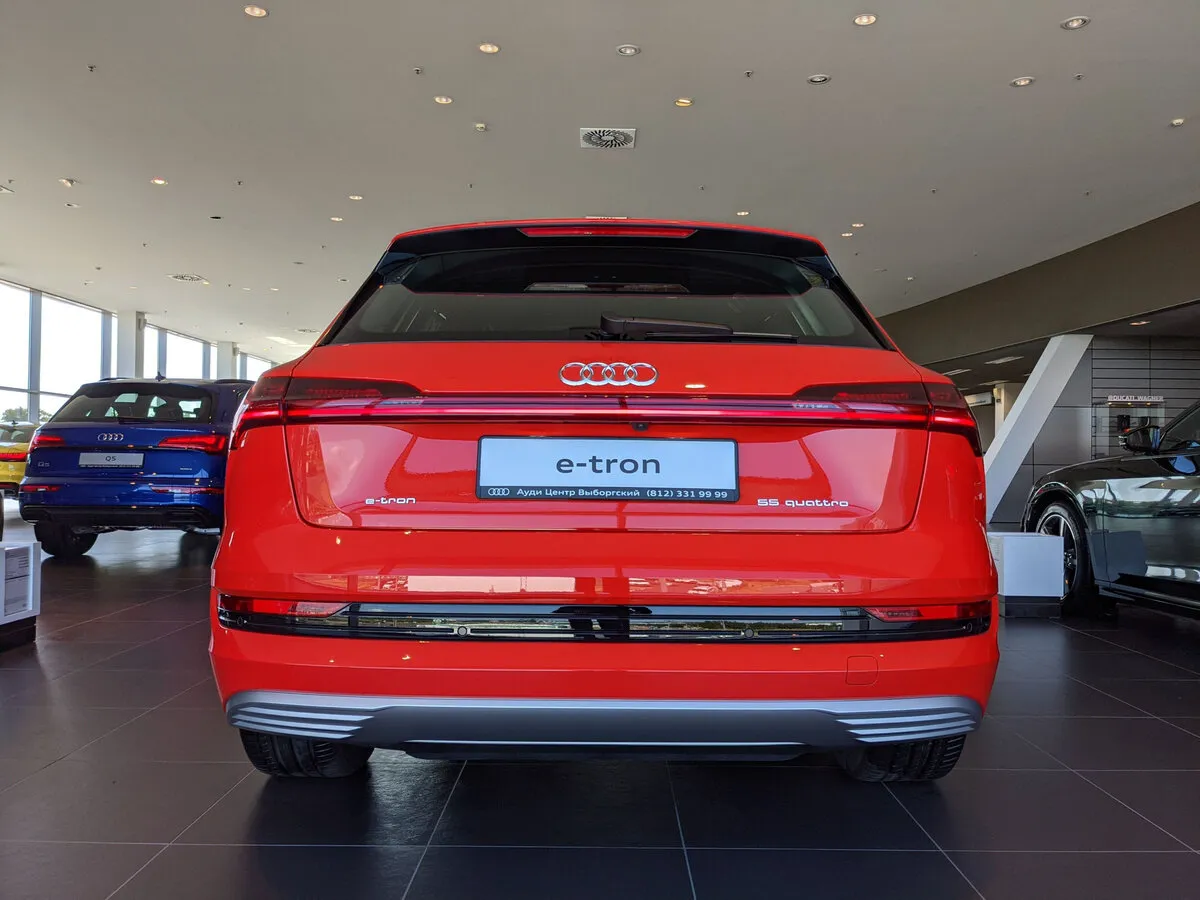
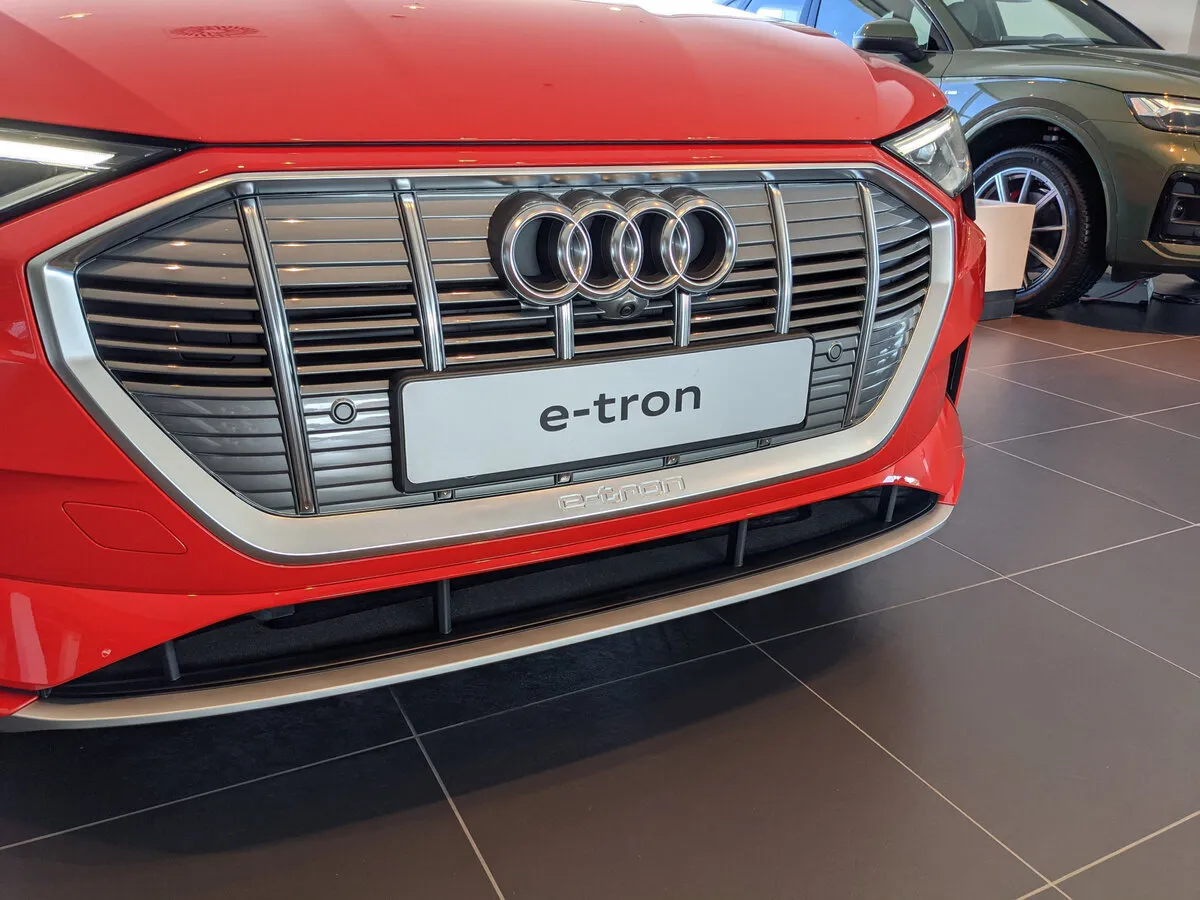
The Audi e-tron 55 (2018–2023) and its successor the Audi Q8 e-tron (2023+) represent Audi's flagship electric SUV — a near-2.5-tonne luxury vehicle with dual-motor AWD, up to 503hp in boost mode, and a 95 kWh battery. Built on a modified MLB Evo platform, it has attracted serious attention from ABT Sportsline, Mansory and Prior Design. While power tuning on EVs remains limited by closed ECU architecture, the aero and wheel game is exceptionally strong. This guide covers every meaningful upgrade available in 2026 for both the original e-tron 55 and the updated Q8 e-tron, helping owners make the most of Audi's pioneering electric SUV.
Specifications
Body Kits for the Audi e-tron 55 / Q8 e-tron
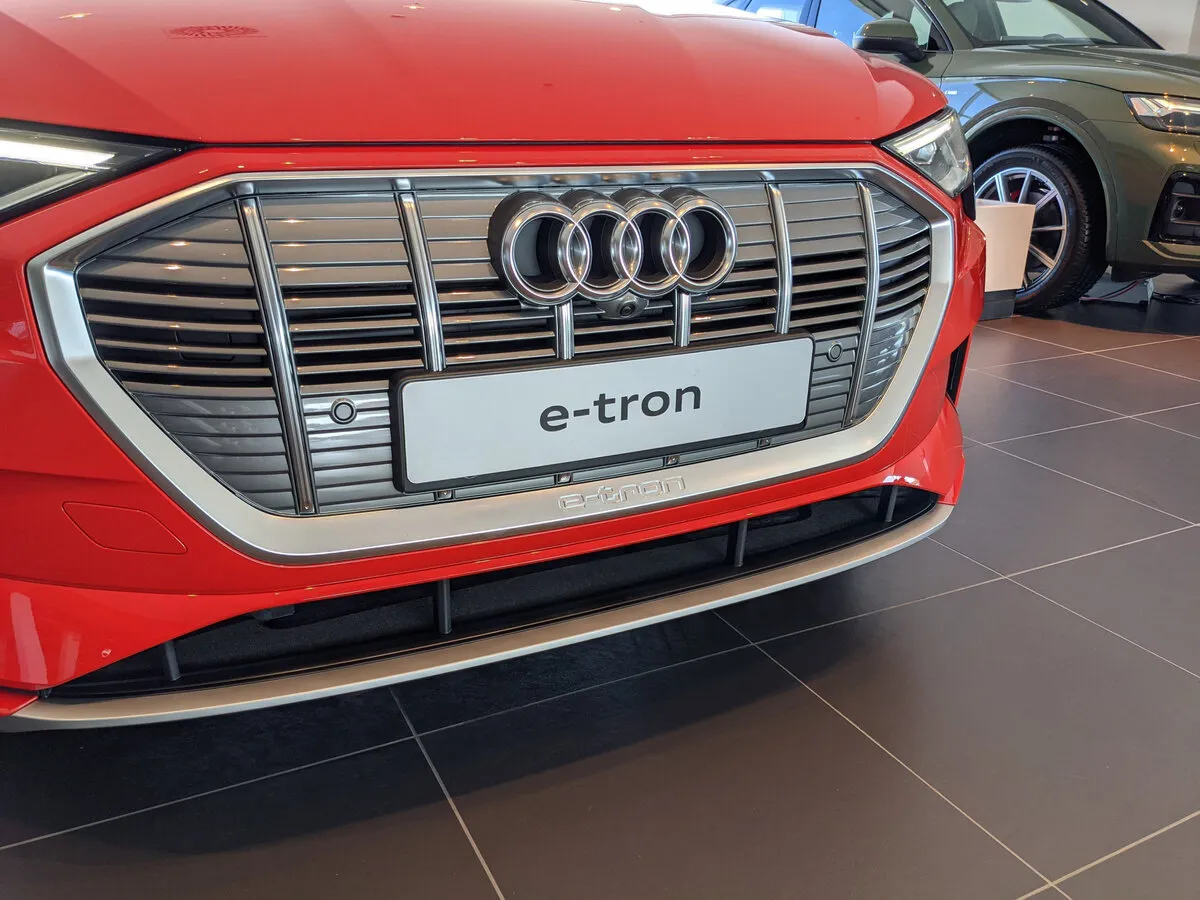
The e-tron's large, smooth body panels and bold proportions make it an ideal canvas for aero packages. The OEM design is clean but conservative — aftermarket body kits transform the visual presence dramatically.
ABT Aerokit e-tron
ABT Sportsline — Audi's most respected official partner — developed a purpose-built aerokit specifically for the e-tron and Q8 e-tron. The package includes a front splitter with integrated canards, side skirt add-ons in gloss black or carbon, and a rear diffuser with carbon trim inserts. ABT designed the kit to preserve the factory bumper structure and wiring, making installation clean and reversible. The kit pairs perfectly with ABT's 22-inch HR22 forged wheels (also designed specifically for this model). Overall character: subtle but unmistakably sporting. Price: €8,000–12,000 depending on finish options and wheel inclusion.
Mansory e-tron Carbon Programme
Mansory brings their signature ultra-aggressive aesthetic to the e-tron with a full carbon fibre programme. The package features a restyled carbon fibre hood with raised centre rib, a redesigned front fascia with enlarged lower intakes (aesthetic, not functional on an EV), carbon side additions and mirror covers, wider arch extensions, and a rear diffuser with quad exhaust-style trim (cosmetic). The Mansory e-tron is unmistakable and polarising in equal measure. For buyers who want maximum visual impact, this is the definitive choice. Full programme: €20,000–28,000 depending on carbon weave specification.
Prior Design PD e-tron Widebody
Prior Design from Germany offers the PD e-tron Aerodynamic Kit — a polyurethane package comprising a front lip spoiler, side skirts, and rear diffuser. Prior Design's strength is accessibility: polyurethane construction keeps costs reasonable, and their fitment quality is reliable. This is the ideal choice for owners who want a meaningful visual upgrade without the premium pricing of ABT or Mansory. The kit gives a wider, more planted look. Price: £3,500–6,500 including fitting.
Caractere Exclusive e-tron
Caractere Exclusive, the Belgian tuner with strong OEM-level engineering credentials, offers a specific e-tron programme including a revised front lip, side skirt extensions, and rear diffuser. What sets Caractere apart is fit quality: their parts are manufactured to OEM tolerances and align perfectly with factory panel gaps. This is the safest choice for buyers who prioritise quality over aggression. Caractere kits are also dealer-install friendly. Price: €4,000–7,000.
Hodoor.world sources and delivers ABT, Mansory, Prior Design, Caractere and other premium kits to customers in Germany, UK, UAE, Norway, Australia and 40+ countries. Pricing, fitment advice and shipping included.
Contact: [email protected]
Wheels for the Audi e-tron 55 / Q8 e-tron
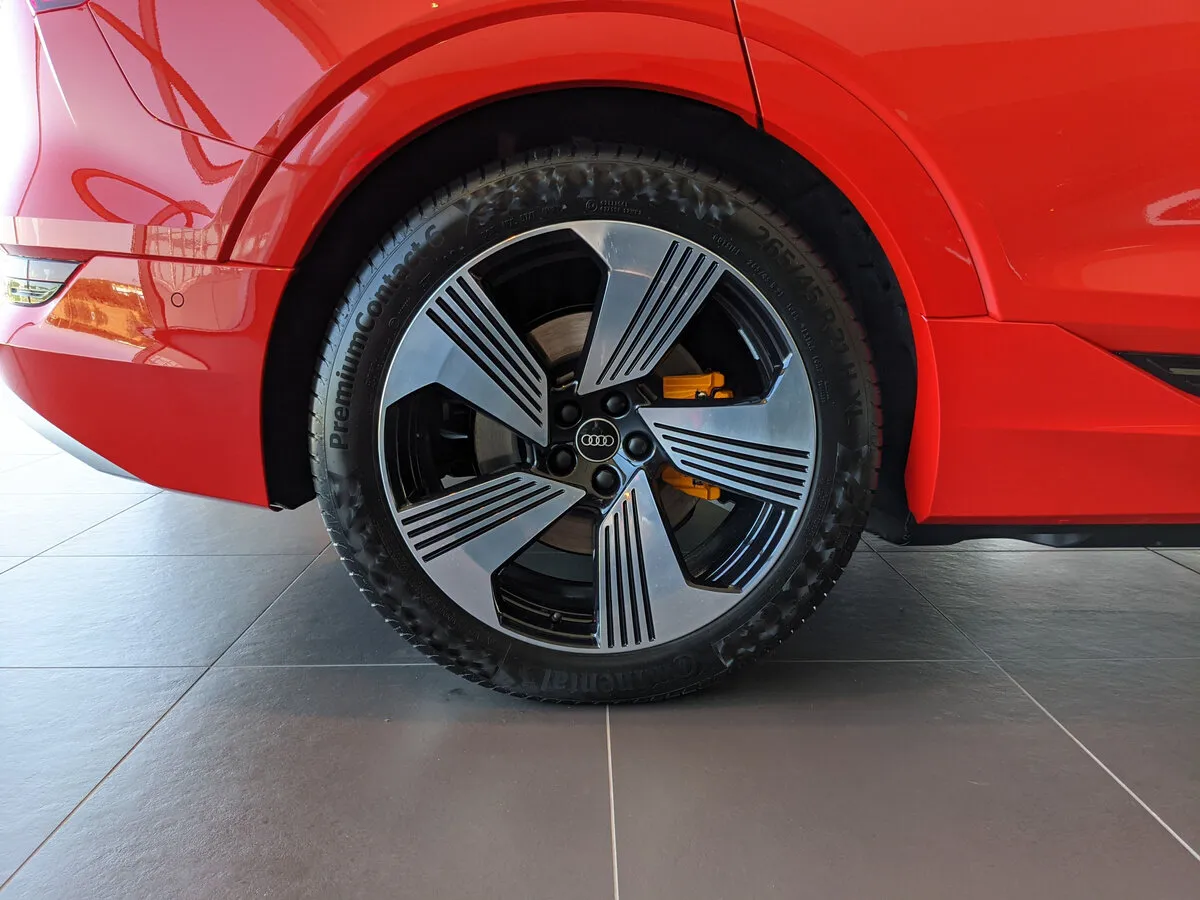
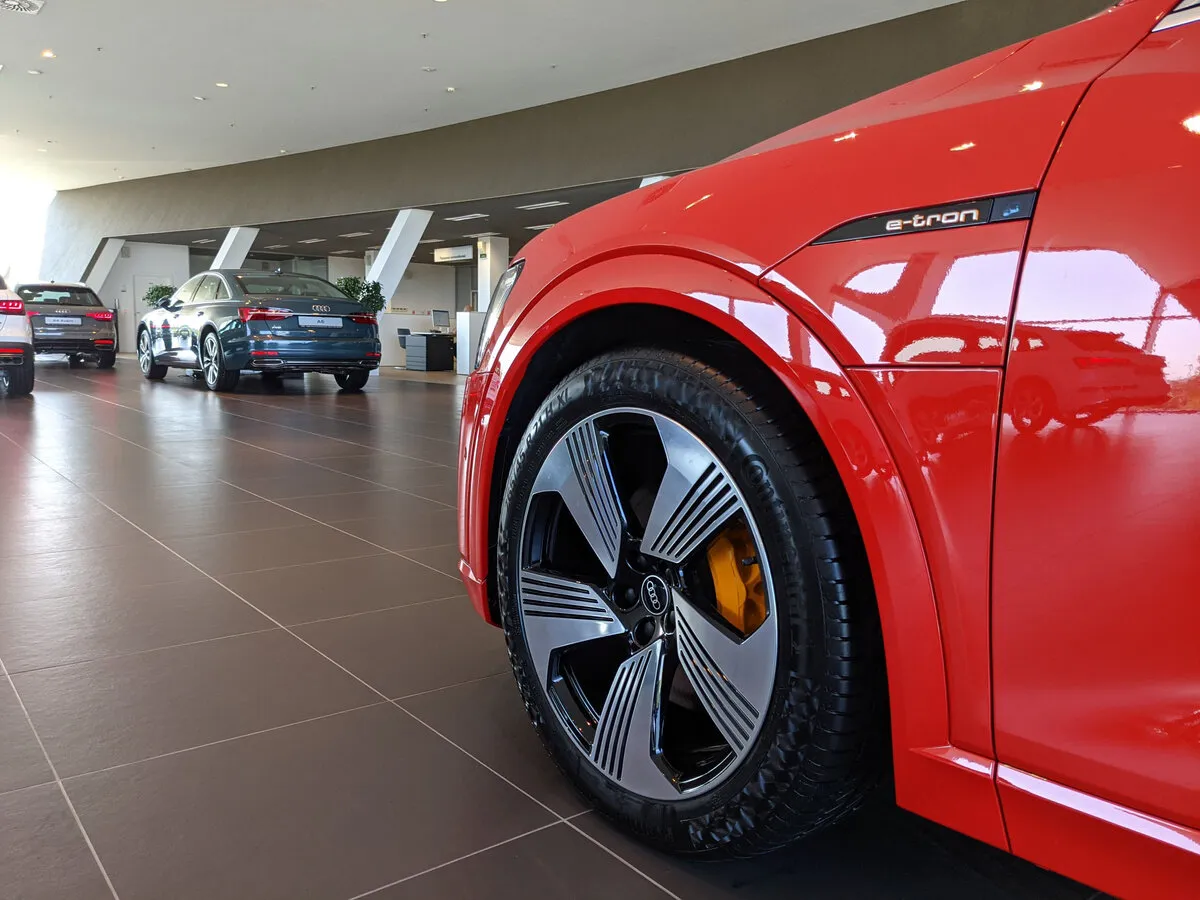
Wheel selection for the e-tron 55 requires careful consideration of two factors unique to this car: its 2,490 kg kerb weight and the critical impact of unsprung weight on electric range. The factory fits 20–21 inch wheels; the tuning sweet spot is 21×9.5 ET25 or 22×10 ET20.
Recommended tyre sizes:
- 21-inch fitment: 265/45 R21
- 22-inch fitment: 265/35 R22
At 2,490 kg, forged wheels are strongly recommended — not merely for aesthetics, but for structural integrity and reduced unsprung mass. Cast wheels at this vehicle weight can be stressed at the limits of their load ratings on performance driving. Forged construction also reduces unsprung weight by 3–5 kg per corner, which improves ride quality and reduces the range penalty from large-diameter wheels.
Top Recommended Forged Wheels
- ABT HR22 — Developed specifically for the e-tron/Q8 e-tron in 22-inch diameter. Perfect OEM+ fitment, available in matte black, gloss anthracite and bi-colour. The most direct choice.
- Vossen HF-5 — Multi-piece hybrid forged wheel, available in custom sizes and offsets. Exceptional finish quality and a wide colour range. Popular in UAE and UK markets.
- HRE P101 — Monoblock forged, aggressive multi-spoke design. American-made, concave face profile. Ideal for 22-inch fitment.
Tyre recommendation: For EV owners, tyre choice directly impacts range. Low rolling resistance tyres are strongly recommended: Pirelli P Zero E (performance EV tyre, E marking = optimised rolling resistance) or Continental SportContact 7 E. Expect 5–8% range reduction when moving from 21-inch to 22-inch regardless of tyre choice — this is physics, not brand-specific.
Performance Upgrades (EV-Specific)
The Audi e-tron 55's powertrain presents a fundamentally different tuning landscape compared to ICE vehicles. Understanding what is and is not possible is critical before investing.
Software / ECU
The e-tron ECU operates on a closed architecture — traditional ECU remapping is not available. Unlike Audi's TFSI and TDI engines, there is no OBD-accessible fuel and ignition map to modify. However, limited unlocks are available via OBD-based tools from specialist EV tuners:
- Boost mode permanent unlock: The factory 503hp boost mode is limited to 30 seconds. Some OBD tools can extend or permanently enable this mode. Note: this increases battery thermal load and is not factory-supported — warranty implications apply.
- Top speed limiter removal: Factory limited to 200 km/h. Removal is available via specialist tools.
EV software tuning is an emerging field — the options in 2026 are meaningfully better than 2022, but still limited compared to ICE tuning.
Suspension
- ABT Lowering Springs: -20mm drop, significantly improves visual stance and handling sharpness. Maintains stock shock absorbers. Direct bolt-on installation.
- Bilstein B12 Coilover Kit: Full coilover solution for sharper handling. Adjustable ride height and damper stiffness. Ideal for sporty driving without sacrificing daily usability.
Brakes
The e-tron's regenerative braking system handles the majority of deceleration in normal driving — the friction brakes see relatively little use. However, for sport or track driving scenarios, upgraded brake pads (Ferodo DS Performance, EBC Yellowstuff) improve bite and thermal resistance. The factory Brembo-sourced brake hardware is generally adequate; pad upgrades are the practical performance improvement.
Summary: for the Audi e-tron 55, invest 80% of budget in aero and wheels, 20% in software and suspension. This is where the ROI is highest.
Interior Upgrades
The e-tron's interior is already Audi's best — dual MMI screens, virtual cockpit, premium materials. Upgrades focus on personalisation and refinement:
- ABT Carbon Interior Trim Set: Real carbon fibre overlays for dashboard inserts, door trim and centre console. OEM fit guaranteed.
- Custom Leather Upholstery: Both ABT and Mansory offer full re-trimming in Nappa leather with contrast stitching. Mansory's embroidered headrests with custom logos are particularly popular.
- Virtual Cockpit Display Enhancement: Custom digital instrument themes available from specialist suppliers. Subtle but effective personalisation.
- Acoustic Glass Upgrade: The e-tron is already quiet — but acoustic laminated glass for front and rear windows pushes NVH levels to near-silence. Particularly valued by e-tron owners who chose the car partly for its EV quietness.
Why Tune Your Audi e-tron 55 in 2026?
The argument for investing in Audi e-tron 55 tuning in 2026 is stronger than at any previous point — for several converging reasons.
Residual value window. The e-tron 55 (2018–2023 generation) has experienced significant value depreciation, as expected for first-generation EVs. A car that listed at £75,000–85,000 new now trades in the secondary market at £25,000–35,000. This means a tuning investment of £5,000–15,000 represents a proportionally different calculation than it did in 2020 when the car was worth £70,000+. The cost-to-value ratio for tuning a £30,000 e-tron is compelling — you can genuinely transform the car for 15–30% of its current value, achieving a result that cannot be replicated for that price through a straight upgrade purchase.
Parts availability is at peak now. ABT Sportsline, Mansory, Prior Design and Caractere all have current-generation e-tron kits in production and in stock. As the model continues to age, production runs will close. Mansory in particular is known to retire programmes for models that have left production — the window to order an original e-tron programme may be limited. 2026 is the right time to act before availability begins to narrow.
The Q8 e-tron transition. The Q8 e-tron (2023+) is gradually displacing the original e-tron 55 in the second-hand market. Within 3–5 years, original e-tron 55 cars will be the clearly "older" model. Building the definitive e-tron 55 now — while tuning parts are readily available and the car still commands respect — makes more sense than waiting. Notably, some Q8 e-tron aero components share dimensional compatibility with the original e-tron, providing additional sourcing flexibility for forward-thinking buyers.
EV tuning maturity. The software and hardware ecosystem for e-tron tuning has matured significantly since 2022. ABT now offers complete EV programmes including software, suspension and aero that simply did not exist three years ago. The OBD-based tools for boost mode extension are more reliable and better-supported. Suspension solutions specific to the e-tron's weight characteristics are in full production. The timing is right.
The conclusion is straightforward: 2026 offers a unique combination of accessible car prices, mature parts availability and a growing EV tuning ecosystem. Owners who act now will have the best selection, the best prices, and the most complete result. Waiting means narrowing options.
Frequently Asked Questions
Does the ABT Aerokit fit both the e-tron 55 and the Q8 e-tron?
ABT Sportsline manufactures separate kits for the original e-tron (2018–2023) and the Q8 e-tron (2023+), as the facelifted model has revised front and rear bumper geometry. Always specify your exact model year when ordering. The two kits share a visual family but are not interchangeable. When ordering through Hodoor.world, we confirm fitment compatibility before any order is placed.
Can the 30-second boost mode be made permanent via software?
The factory boost mode (503hp / 973 Nm) is restricted to 30-second bursts to protect battery thermal management. Some specialist OBD-based EV tuning tools can extend or remove this restriction, effectively making boost mode continuous. This is not factory-supported and carries warranty implications. Battery thermal stress increases under sustained high-output operation. For spirited road use, permanent boost unlock is popular; for track use, ensure active cooling is monitored. This modification is reversible.
What is the real-world range on 22-inch wheels?
Moving from stock 21-inch wheels to 22-inch increases rolling resistance and aerodynamic drag (slightly larger tyre contact patch, marginally higher ride height reduction from lower profile). Real-world range reduction is 5–8% compared to 21-inch. On the original e-tron 55 with its ~380 km WLTP figure, expect approximately 345–360 km real-world range on 22-inch wheels with an appropriate low-rolling-resistance tyre. On the Q8 e-tron (600 km WLTP), the real-world figure on 22s drops to approximately 540–560 km. Using Pirelli P Zero E or Continental SportContact 7 E tyres minimises this penalty.
The e-tron 55 weighs 2,490 kg — does this affect wheel choice?
Yes, significantly. At 2,490 kg, the e-tron 55 is among the heaviest passenger vehicles on European roads. Each wheel carries an average of approximately 622 kg static load, with dynamic loads considerably higher under cornering and braking. Standard cast alloy wheels rated at typical 720–750 kg per wheel are operating near their limits under aggressive driving. Forged wheels are strongly recommended — look for a minimum load rating of 820 kg per wheel. ABT HR22, Vossen HF-5 and HRE P101 all meet this threshold. Forged construction also reduces unsprung weight by 3–5 kg per wheel, improving ride, handling and range simultaneously.
From body kits and forged wheels to suspension and interior upgrades — Hodoor.world sources and ships to 40+ countries. Germany, United Kingdom, UAE, Norway, Australia and beyond.
Contact: [email protected]