RAYS VOLK RACING RE30 Forged Wheels


RAYS VOLK RACING RE30 — Japan's Touring Car Racing Classic
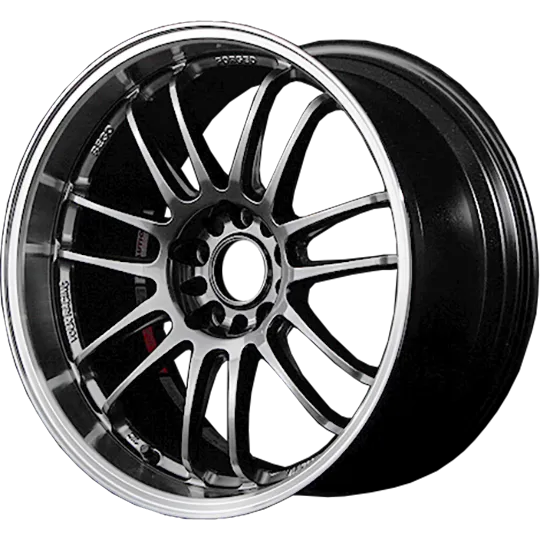
Few wheels carry the cultural weight of the RAYS VOLK RACING RE30. Born on the circuits of the 1993 All Japan Touring Car Championship, the RE30's distinctive fan-spoke profile became the visual signature of an entire era of Japanese motorsport. Where the TE37 is precision and aggression, the RE30 is drama and heritage — a wheel whose aerodynamic spoke geometry was engineered to actively cool brake components at racing speeds, a function as relevant on track today as when it first appeared.
Available Sizes
- Diameters: 13" | 14" | 15" | 16" | 17" | 18" | 19" | 20" | 21" | 22" | 23" | 24"
- Available Widths: 5J to 14.5J
- Typical Offsets: ET−25 through ET+50 depending on platform
- Bolt Patterns: 4×100, 5×100, 5×114.3, 5×120, and additional patterns on request
- Center Bore: 73.1mm; hub-centric rings available for non-standard bore applications
RE30 wheels are finished individually at RAYS' Shizuoka facility, with each spoke face hand-inspected before release. The distinctive Volk Bronze and Volk Racing Gold colourways are officially catalogued and have remained continuous production options since the wheel's debut.
Need a Different Size or Finish?
The RE30's appeal spans both classic period-correct restorations and modern builds seeking a heritage aesthetic on contemporary platforms. Our sourcing team can assist with non-standard bolt patterns, unusual offsets for aggressive fitments, and special finish requests. Contact us for availability on limited-run RE30 colourways. We also offer an AI Wheel Design Service if you want a custom spoke pattern or finish concept visualised before committing to an order.
Technical Specifications
- Construction: 1-piece forged monoblock (A6061-T6 aluminium alloy)
- Manufacturing Process: RAYS die forging with post-forge CNC machining
- Spoke Design: Fan-spoke aerodynamic profile, 4- or 5-spoke configuration
- Weight Range: 5.9 kg (15×7J) to 9.1 kg (18×10.5J)
- Surface Treatment: RAYS alumite-base electrochemical coating
- Signature Colourways: Volk Bronze, Volk Racing Gold, Gunmetal, White, Pressed Black
- JWL-VIA Certified: Yes
- Available Widths: 5J to 14.5J
Watch the RAYS VOLK RACING RE30 in Action
Vehicle Fitment Guide
The RE30 holds a unique position in the JDM wheel landscape: it remains appropriate for period-correct 1990s builds while fitting naturally on modern sports cars seeking a heritage aesthetic. Popular pairings include:
- Mazda RX-7 FD3S: 17×9J ET+35 | 5×114.3 — the quintessential RE30 application
- Honda NSX NA1/NA2: 17×8.5J ET+40 | 5×114.3 — period-correct motorsport appearance
- Mitsubishi Lancer Evolution IV–IX: 17×8.5J ET+38 | 5×114.3
- Nissan Silvia S13/S14/S15: 17×9J ET+35 | 5×114.3 — classic drift-era fitment
- Toyota Supra A80: 17×9.5J ET+40 | 5×114.3
- Honda Civic EK/EG: 15×7J ET+35 | 4×100 or 5×114.3 depending on year
- Nissan GT-R R32/R33/R34: 17×9J ET+30 | 5×114.3
For fitment and calliper clearance enquiries, contact [email protected].
Other Bolt Patterns Available
- 4×100 — classic Honda Civic, Integra DC2, Mazda Miata NA/NB
- 5×100 — Subaru Impreza GC8/GD, Toyota Celica, Volkswagen platforms
- 5×114.3 — majority of Japanese performance platforms
- 5×120 — BMW 3-series E36/E46, Honda Civic Type R
- 5×130 — Porsche 911 (964/993/996 generation)
RE30 Heritage: The Fan-Spoke That Defined an Era
RAYS Engineering introduced the RE30 at a pivotal moment in Japanese motorsport history. The 1993 All Japan Touring Car Championship was a factory-supported arms race between Nissan, Toyota, Honda, and Mazda — each deploying purpose-built Group A and Group N cars on circuits including Suzuka, Fuji Speedway, and Tsukuba. Wheel selection was a competitive decision, not merely aesthetic, and RAYS' engineers designed the RE30's fan-spoke geometry with brake cooling as an explicit engineering requirement. The swept spoke angle functions as an impeller when the wheel rotates at speed: airflow is directed radially inward through the spoke gaps and across the brake disc face, reducing calliper and rotor temperatures by a measurable margin under sustained circuit braking.
The wheel's cultural significance extended beyond circuit racing almost immediately. By the mid-1990s, the RE30 in Volk Bronze had become the finishing touch on the most respected street-modified Japanese cars: RX-7 FDs, Evo IVs, and early GT-Rs were routinely photographed on RE30s at Japanese tuning events and in print magazines like Option and Best Motoring. The bronze colourway — RAYS' proprietary formulation of warm gold-bronze — achieved an almost universal popularity that persists today as a period-correct reference for JDM builds of the era.
Three decades after its introduction, the RE30 remains continuously catalogued by RAYS — an almost unprecedented achievement in a market where wheel designs typically cycle every few years. Its longevity reflects both the timelessness of its spoke geometry and RAYS' commitment to maintaining the manufacturing tooling needed to produce a wheel that a new generation of owners treats as a cultural artefact.
Forging Philosophy Behind the Fan Spokes
The RE30's fan-spoke configuration presented specific forging challenges that RAYS Engineering's development team addressed through careful die design. Unlike symmetrical spoke layouts, fan spokes are asymmetric in cross-section and require the forging die to apply pressure at compound angles to achieve correct grain orientation throughout each spoke's varying cross-section. RAYS solved this through a multi-stage forging sequence in which the billet is partially formed, reheated, and pressed a second time — a more expensive process than single-stage forging, but one that ensures the spoke roots achieve the same crystalline density as the barrel and hub sections.
The result is an RE30 that, despite its graceful, swept appearance, can withstand the same lateral loads as more aggressively industrial-looking competitors. RAYS tests each production batch against JWL-VIA's rotational bending fatigue, radial load, and impact requirements. The RE30 consistently exceeds rather than merely meets these benchmarks — a fact the company attributes to its insistence on multi-stage forging even for cosmetically-oriented production.
RE30 vs JDM Heritage Competition
| Model | Construction | Spoke Style | Heritage | Era |
|---|---|---|---|---|
| RAYS VOLK RACING RE30 | Forged monoblock | Fan-spoke (4/5) | All Japan Touring Car | 1993–present |
| Enkei RPF1 | Flow-formed cast | 5-spoke flat | Sports compact racing | 2003–present |
| Work Emotion CR Kiwami | Forged monoblock | Multi-spoke | JDM tuning culture | 2000s–present |
| SSR Professor SP5 | Forged 3-piece | 5-spoke stepped | Show/time attack | 1990s–2000s |
Explore the RAYS VOLK RACING Lineup
- RAYS VOLK RACING TE37 — iconic six-spoke monoblock circuit wheel since 1996
- RAYS VOLK RACING ZE40 — time attack specialist, WTAC-proven triangulated six-spoke
- RAYS VOLK RACING TE37SL — street-durable TE37 with double-flange reinforcement
- RAYS VOLK RACING CE28 KCR — Competition Element 28mm spoke, Kamui Kobayashi Racing Edition
- RAYS VOLK RACING G25 — multi-spoke gran turismo forged for luxury performance
- RAYS VOLK RACING G25EDGE — evolved G25 design with assertive Edge spoke architecture
- Browse all forged wheels at Hodoor World
Can't Find the Right Wheel?
When the RE30 catalogue does not match your exact requirements, Hodoor offers a custom forged wheel manufacturing service capable of producing bespoke specifications including unusual spoke counts, exclusive patina finishes, and custom PCD combinations. Our team maintains direct relationships with RAYS Japan for special production requests. You can also use our AI Wheel Design Service to visualise your concept before production begins.
How to Order the RAYS VOLK RACING RE30
- Identify your vehicle's bolt pattern and required offset range
- Select diameter, width, and preferred colourway (Volk Bronze is a popular period-correct choice)
- Email [email protected] with your vehicle details for fitment confirmation
- Confirm your order configuration — special colourways and sizes may require deposit
- Your RE30 set ships with RAYS certificate of authenticity and competition centre caps
- Track your shipment via the Hodoor World customer portal at hodoor.world
RE30 Frequently Asked Questions
Q: Is the RE30 still manufactured by RAYS today, or is it a heritage reissue?
A: The RE30 remains a continuously manufactured catalogue product at RAYS Engineering — not a reissue or heritage reproduction. RAYS has maintained production tooling for the RE30 since its 1993 introduction, and current production wheels carry the same JWL-VIA certification and material specifications as equivalent modern RAYS products. You are purchasing a new wheel, not a vintage item.
Q: What makes the Volk Bronze colour distinctive compared to aftermarket bronze alternatives?
A: RAYS' Volk Bronze is a proprietary powder-coat formulation developed specifically for the RE30 and certain other RAYS models. The exact gold-bronze ratio, metallic particle size, and clear-coat chemistry are RAYS trade secrets. Aftermarket colours described as "bronze" vary considerably; Volk Bronze has a warm, slightly golden bias that photographs distinctly and has strong collector recognition in the JDM community.
Q: Can the RE30 be used for competitive circuit events today?
A: Yes. The RE30 remains competitive on circuit and is popular in vintage-class time attack events in Japan, Australia, and the USA. Its forged monoblock construction meets all JWL-VIA requirements and it is approved for use in various club and series regulations. The fan-spoke geometry does provide genuine brake cooling benefit at sustained circuit speeds.
Q: Are wider RE30 sizes available for aggressive fitment builds?
A: RE30 widths extend up to 14.5J on request via RAYS Japan special production. Standard catalogue maximum width is typically 11J in 18" diameter. For builds requiring 12J or wider, our custom order team can source non-catalogue specifications with RAYS factory quality.
Discover Hodoor World
Hodoor World curates the finest forged wheels from RAYS Engineering, Brixton, Forgeline, Work Wheels, and other world-class manufacturers. Our specialists provide fitment expertise and competitive pricing for buyers who prioritise quality and heritage provenance. Explore the full range at hodoor.world.
Wheel Care and Maintenance
RAYS VOLK RACING RE30 wheels in Volk Bronze and other metallic finishes require consistent care to maintain their appearance:
- Wash weekly with pH-neutral car shampoo and a soft wheel brush — avoid acidic or alkaline cleaners
- Iron fallout remover (fallout spray) prevents brake dust from bonding permanently to the coating
- Polish with a non-abrasive aluminium wheel polish if swirl marks develop
- Apply carnauba wax or spray sealant to all spoke faces and barrel after cleaning
- Store off-vehicle in a dry, UV-protected environment if removing for seasonal periods
- Torque lug nuts to vehicle manufacturer specification after installation — recheck after 50 km
International Delivery
Hodoor World delivers RAYS VOLK RACING RE30 wheels globally. Standard delivery to UK, EU, USA, Canada, Australia, and Japan is supported with tracking and insurance included. DDP pricing is available for most destinations to eliminate import duty surprises. In-stock sizes ship within 2–3 business days; non-catalogue configurations sourced from RAYS Japan carry an 8–12 week production lead time. Email [email protected] for international freight rates.